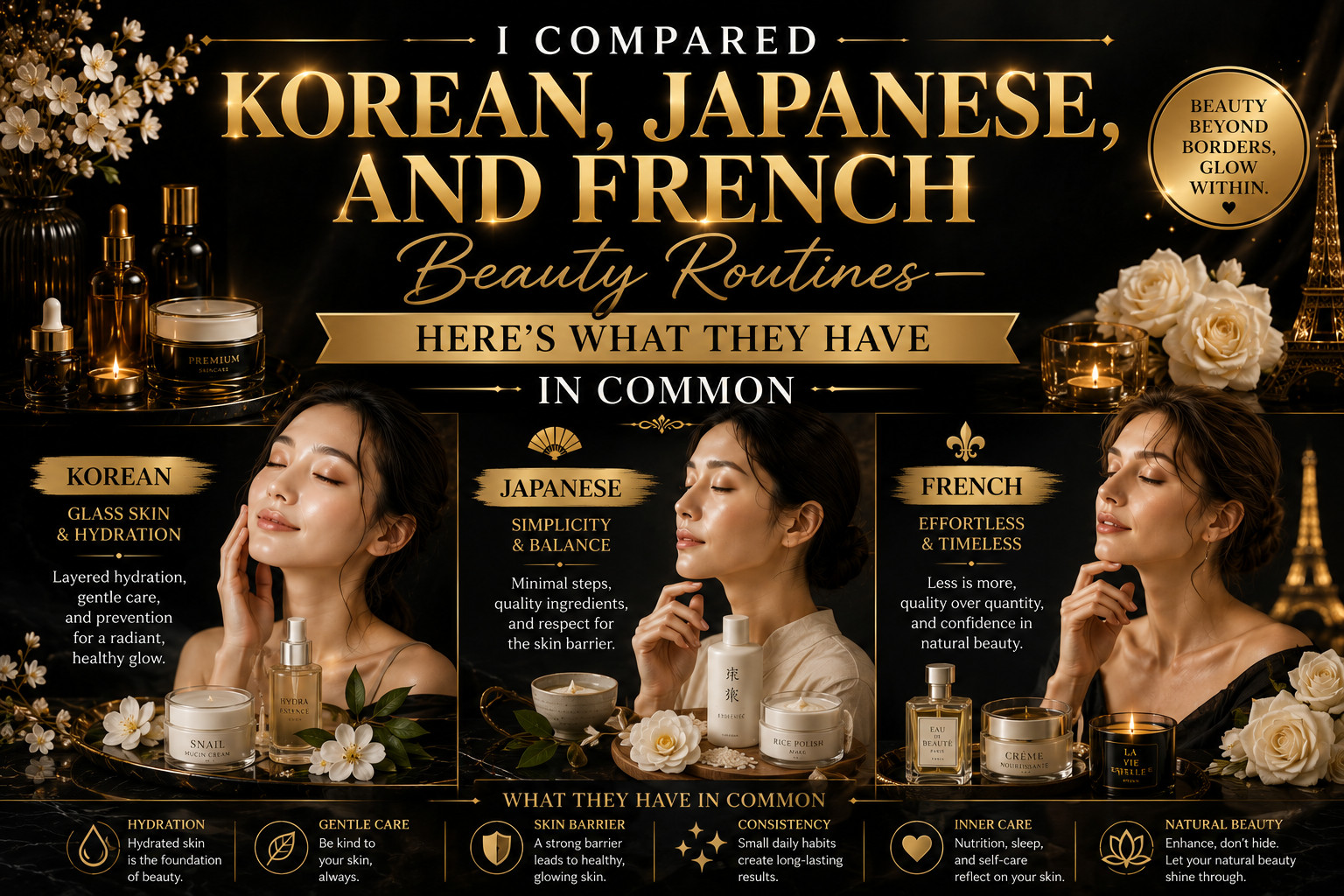
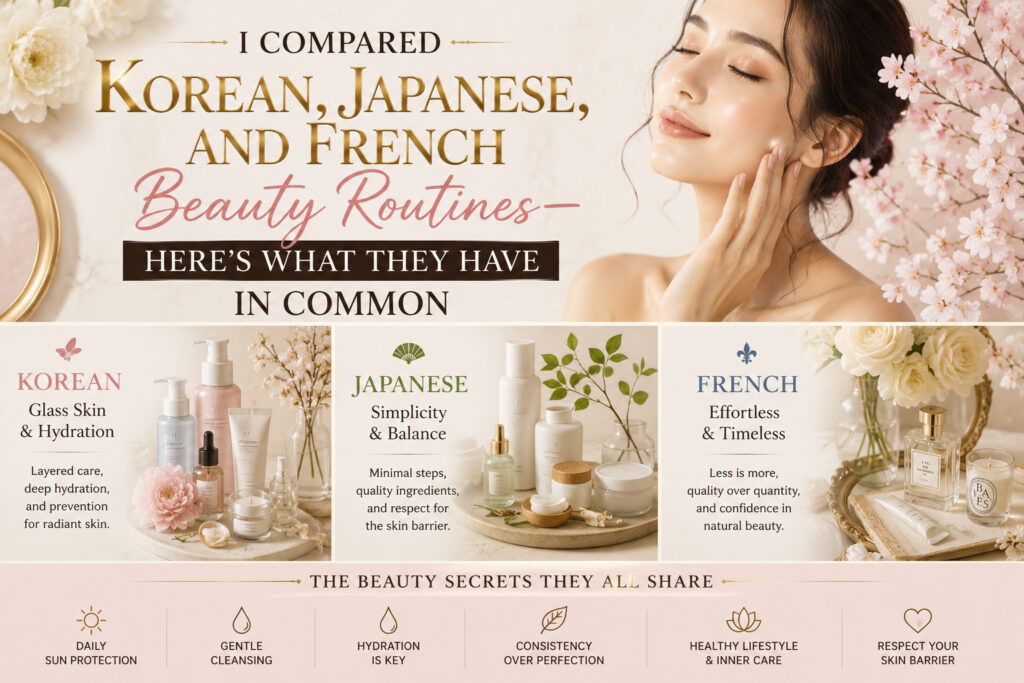
If you’ve ever searched for the secret to beautiful skin, you’ve probably come across Korean glass skin, Japanese minimalist beauty, and French effortless elegance. Each approach has inspired millions of people worldwide, but they don’t rely on the same products or follow identical routines.
What happens when you compare them side by side?
After exploring their skincare philosophies, ingredient choices, and everyday habits, one thing becomes clear: despite their differences, these three beauty cultures share several powerful principles. Surprisingly, these common habits matter far more than owning dozens of expensive products.
Let’s discover what they all have in common—and how you can use these lessons to build a routine that actually works.
Korean Beauty: Prevention Comes First
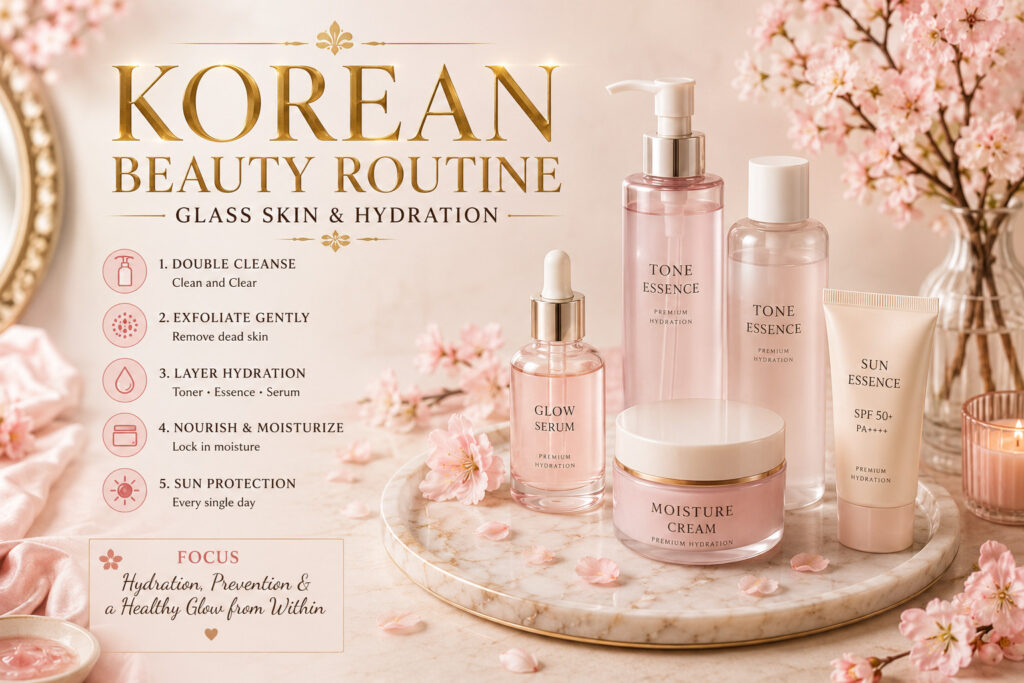
Korean skincare is known for its detailed routines and focus on maintaining healthy skin before problems appear.
Core Principles
- Daily sunscreen
- Gentle cleansing
- Deep hydration
- Layering lightweight products
- Consistent skincare habits
- Bright, healthy-looking complexion
Popular ingredients include:
- Centella Asiatica
- Snail mucin
- Rice extract
- Green tea
- Ceramides
- Hyaluronic acid
The Korean philosophy is simple: healthy skin is easier to maintain than damaged skin is to repair.
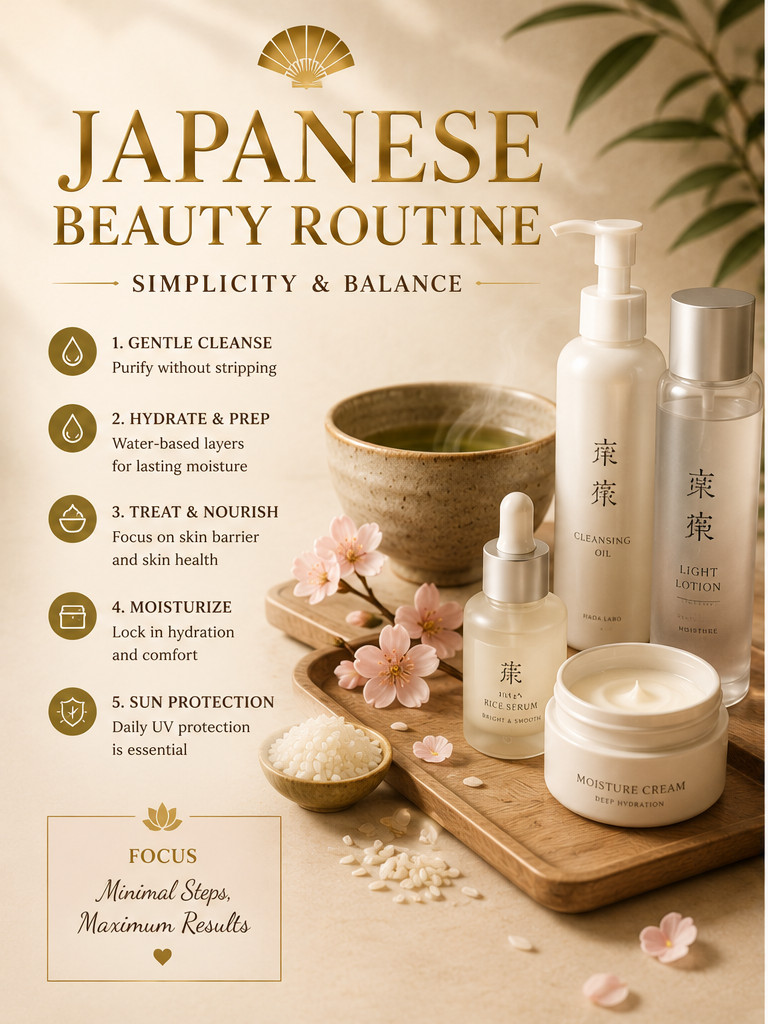
Japanese Beauty: Simplicity with Purpose
Japanese beauty routines are often shorter but extremely consistent. Instead of chasing every new trend, they focus on quality ingredients and gentle care.
Core Principles
- Fewer products
- Mild cleansers
- Hydrating lotions
- Lightweight moisturizers
- Daily UV protection
- Respect for the skin barrier
Popular ingredients include:
- Rice bran
- Camellia oil
- Fermented extracts
- Seaweed
- Green tea
- Squalane
The emphasis is on preserving the skin’s natural balance rather than constantly treating it.
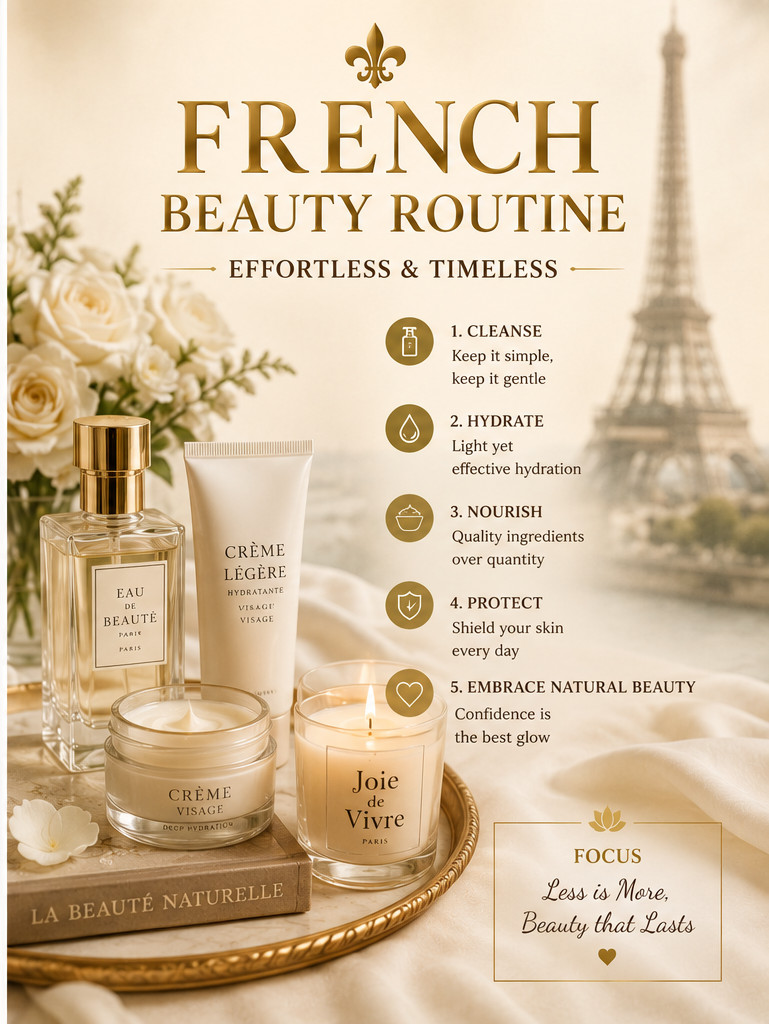
French Beauty: Less Is More
French beauty is often associated with naturally healthy skin rather than heavy makeup.
Instead of hiding imperfections, the goal is to keep skin looking fresh and comfortable.
Core Principles
- Gentle cleansing
- High-quality moisturizers
- Minimal makeup
- Healthy lifestyle
- Confidence over perfection
- Avoiding overuse of skincare products
Many French routines prioritize skincare that feels enjoyable and sustainable over complicated regimens.
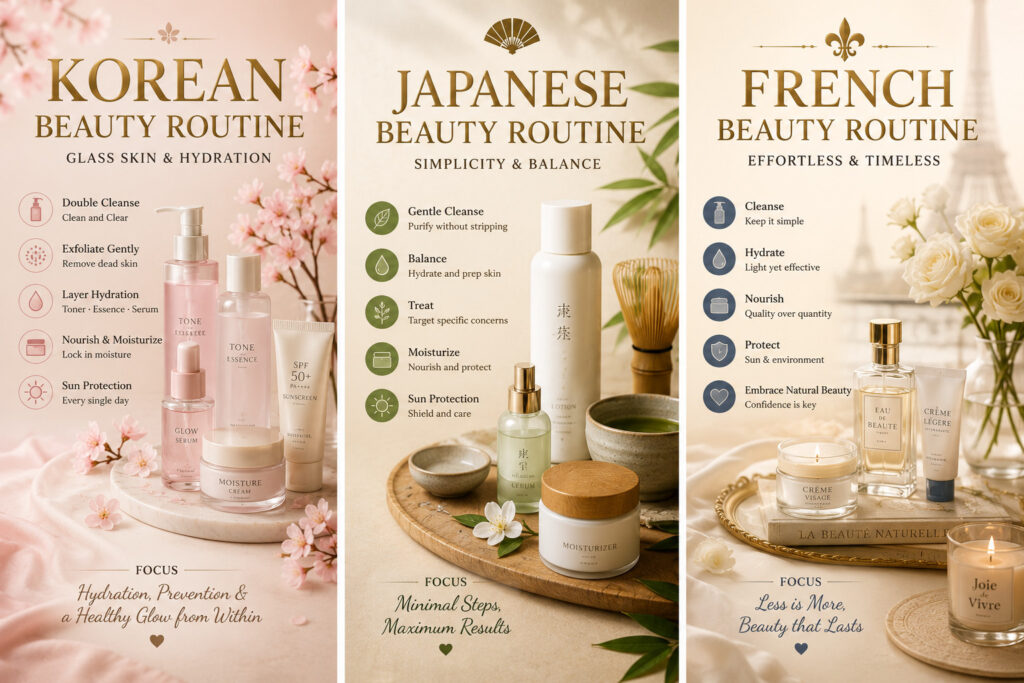
What All Three Beauty Routines Have in Common
Although these approaches look different, they share several habits that consistently support healthy skin.
1. Sunscreen Is Non-Negotiable
Every successful skincare philosophy emphasizes protecting the skin from UV damage.
Daily sun protection can help reduce:
- Premature wrinkles
- Dark spots
- Uneven skin tone
- Loss of firmness
No serum can replace consistent sun protection.
2. Gentle Cleansing
None of these routines encourage harsh scrubbing or overly aggressive cleansers.
The goal is to remove dirt, sunscreen, and makeup while keeping the skin barrier intact.
3. Hydration Matters
Healthy-looking skin is well-hydrated skin.
Whether it’s Korean essences, Japanese lotions, or French moisturizers, all three approaches prioritize maintaining moisture.
Hydrated skin often appears
- Smoother
- Brighter
- More supple
- More comfortable
4. Consistency Beats Perfection
Beautiful skin isn’t created by using 20 products for one week.
It’s created by following a simple routine every day.
Small daily habits usually outperform occasional intensive treatments.
5. Healthy Skin Starts Inside
Skincare products matter, but lifestyle also plays a major role.
Each culture values habits such as:
- Eating balanced meals
- Drinking enough water
- Managing stress
- Getting enough sleep
- Staying physically active
Healthy skin reflects overall well-being.
6. Prevention Is Better Than Repair
Instead of waiting for wrinkles or pigmentation to appear, these routines focus on preventing damage early.
This includes:
- Daily sunscreen
- Moisturizing regularly
- Avoiding unnecessary irritation
- Treating the skin gently
7. Respect Your Skin Barrier
A healthy skin barrier helps lock in moisture and protects against environmental stress.
Over-exfoliation and constantly trying new products can weaken it.
All three beauty traditions favor products that support rather than overwhelm the skin.
8. Less Stress, Better Skin
Stress affects sleep, hormones, and inflammation, all of which can influence the appearance of the skin.
Many beauty rituals from Korea, Japan, and France encourage slowing down and making skincare a relaxing daily habit.
Which Routine Is Best?
The answer depends on your preferences and skin needs.
Choose Korean Beauty If:
- You enjoy skincare as a hobby.
- You like layering lightweight products.
- Your main goal is hydration and a radiant complexion.
Choose Japanese Beauty If:
- You prefer a minimalist routine.
- You have sensitive skin.
- You value gentle, reliable products.
Choose French Beauty If:
- You want a simple routine.
- You prefer a natural look.
- You focus on long-term skin health instead of trends.
You don’t have to choose just one. Many people create a balanced routine by combining the best ideas from each philosophy.
Build Your Own Global Beauty Routine
A practical routine inspired by all three traditions might look like this:
Morning
- Gentle cleanser
- Hydrating toner or lotion
- Vitamin C serum (optional)
- Lightweight moisturizer
- Broad-spectrum sunscreen
Evening
- Remove makeup and sunscreen
- Gentle cleanser
- Hydrating serum
- Moisturizer
- Treatment product (only if needed)
Final Thoughts
The biggest surprise isn’t how different Korean, Japanese, and French beauty routines are—it’s how much they agree on the fundamentals.
Healthy skin isn’t built through expensive products or viral hacks. It’s built through consistent care, gentle cleansing, hydration, sun protection, and a lifestyle that supports your overall health.
Whether you prefer the layered innovation of Korea, the timeless simplicity of Japan, or the effortless elegance of France, the real secret is consistency. Choose habits you can maintain every day, and your skin will thank you over time.
FAQs
Can I combine products from Korean, Japanese, and French brands?
Yes. Many people successfully build routines using products from different countries, as long as the ingredients suit their skin.
Which routine is best for sensitive skin?
A simple, gentle routine with fragrance-free products and consistent moisturizing is often the safest starting point. Patch-test new products before adding them to your routine.
Do I need a 10-step Korean skincare routine?
Not at all. A routine only needs to include the steps your skin benefits from. More products do not automatically mean better results.
What’s the one habit all three routines agree on?
Daily sun protection. Consistent sunscreen use is one of the most effective ways to help maintain healthy-looking skin over time.